
The Cop Who Stayed Outside
Orlando's Invented Hero and the Duty He Abandoned

In the immediate aftermath of the PULSE massacre, stories were told. They were polished for mass consumption, widely distributed, and repeated for years until they hardened into fact. One was a story about heroism. And it was, at best, radically incomplete.
That story centered on Detective Adam Gruler, the off-duty Orlando Police Department officer hired to work security at PULSE on the night of June 12, 2016. What that story left out has cost survivors and victims’ families accountability.
What Gruler Was Hired to Do
Gruler was charged with providing security to PULSE, but abandoned his post. That contract had specific legal weight. Under Florida law, nightclubs serving alcohol are required to be gun-free zones. Gruler’s post — uniformed, armed, at the front entrance — existed precisely to ensure that. His job was to keep the weapons out.
He didn’t.
According to Exhibit 100 released to the public during the trial of the shooter’s wife, Noor Salman, which was informed by surveillance footage recorded at the nightclub, the shooter first entered the building at 1:41 a.m. During this time, Gruler claimed to have left the nightclub premises to chase after an underage drinker that he never found.
The shooter entered the building through PULSE’s front door and main entrance. He paid cover and stayed in the nightclub’s main room for over 10 minutes.
The shooter left the nightclub to get his weapons out of his vehicle, walked along the unpermitted fence that enclosed the illegal patio, and again entered through the front door without ever being stopped once by security.
The second time he entered the club, he knew exactly where all the people were and immediately turned into the most populated areas of the club and opened fire. and
A lawsuit filed by survivors and victims’ families in 2018 put it plainly: Gruler “abandoned his post, thereby allowing the shooter to not only enter the club once to scout out the area and make sure nobody could stop him, but to then leave Pulse, retrieve his firearms, and return to execute his sinister plan.”
You can watch this below, but be aware that this is incredibly disturbing footage even though victims’ bodies were blurred out.
That alleged pre-shooting reconnaissance visit — when Mateen first entered the club, was not stopped, and then left to return armed — is a detail that received almost no sustained public attention.
Outside, While People Died Inside
What happened next has been narrated as bravery. The official timeline tells a different story.
At 2:05 a.m., Gruler — who was still outside the club knowingly at distances ineffective for taking the shooter down — fired multiple rounds toward Mateen and the nightclub, who was making rounds inside the club killing people with his semi-automatic rifle.
People were being killed inside. Gruler stayed outside, took cover, and at times watching him put bullets into the bodies of victims on the ground.
This is documented in Gruler’s own words, in sworn testimony obtained during an Internal Use of Force Investigation that was not completed until 2019. Again, these records were not made readily available to the public and were only accessible through individual public records requests.
Thinking of your family and deciding that you are not going to die may be a human response. No one disputes that Mateen’s weapon was more powerful than Gruler’s sidearm. But Gruler also had body armor — even if inadequate for an assault rifle — and training that the unarmed patrons inside did not have. The people being killed had nothing. Gruler had a sworn duty to act and was trained to follow Active Shooter Protocol. He didn’t enter the building. He stood outside, took pot shots, and watched.
Records indicate that Gruler did not step foot into the club for roughly 10 minutes and 40 seconds. More than twice as long as the five minutes that was reported by local media.
No police entered the building until roughly 8-10 minutes after the shooting began. Responding officers only entered the building after the shooter’s rifle jammed and after the shooter fled into the bathrooms where victims were trapped.
Ten minutes in a mass shooting is an eternity. Most mass shootings are over within the first 5 minutes, with a substantial number over in less than 2 minutes. And during all of those ten minutes, Mateen moved through the club, firing, killing people, nearly uncontested.
Numerous experts have criticized these actions for violating Active Shooter Protocol—national police response standards that have been in place since the Columbine High School shooting in 1997. But these critics were quickly silenced through lies stemming directly from the City of Orlando.
One attorney for the survivors, Solomon Radner, said plainly: “People who were there at the time call him a coward, and the people who were not there give him awards.” This is true.
How the Hero Narrative Was Built
Even before the bodies were counted, the architecture of a different story was under construction. The narrative needed heroes — not only for the public, but for the City of Orlando, which had profound institutional reasons to avoid scrutiny of its off-duty officer program, its club permitting decisions, and its training failures.
Gruler became that hero, first through direct lies told by then Police Chief John Mina.
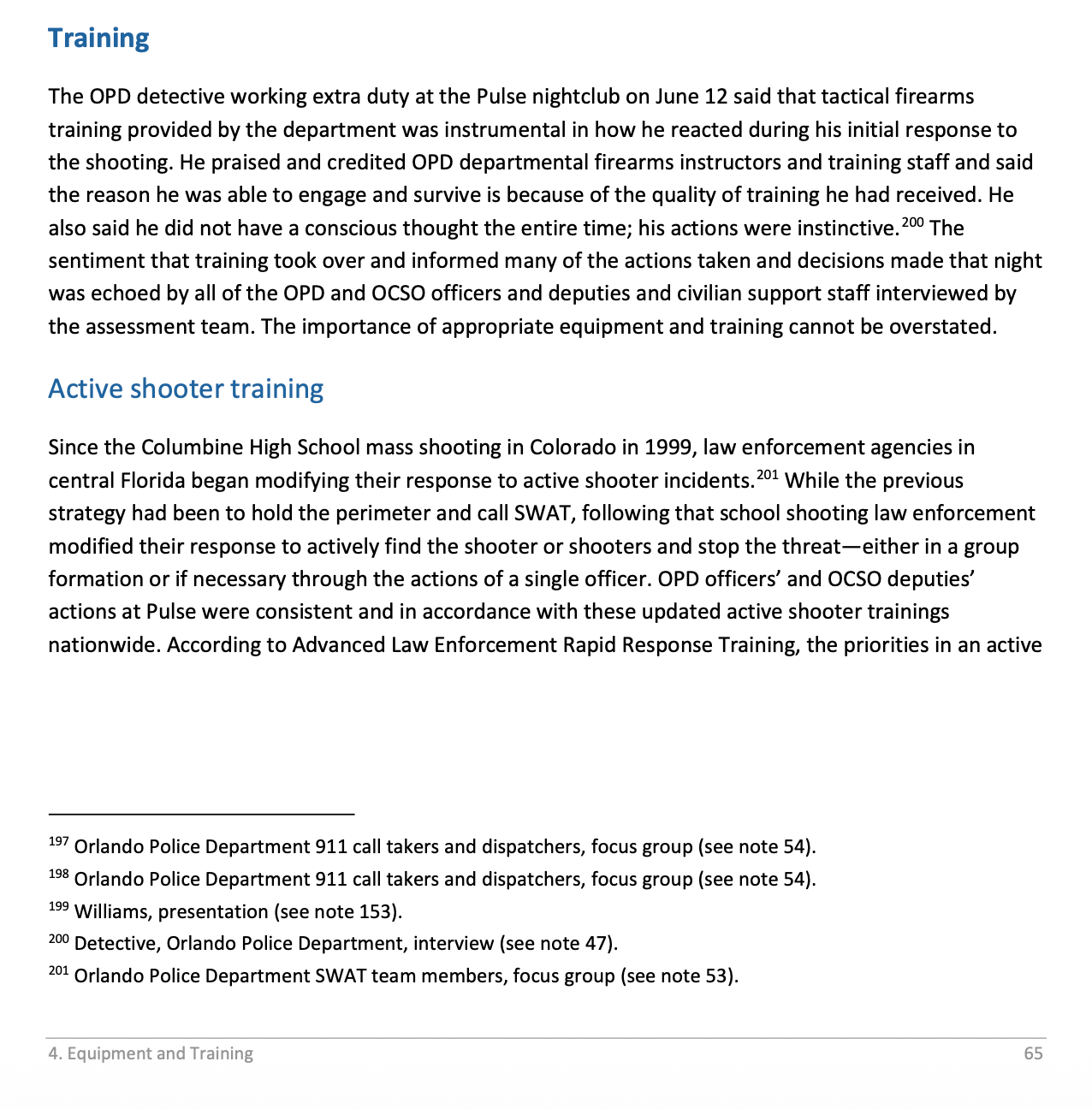
He even told Police Foundation investigators that he followed his training and did not have a single conscious thought during the response. This accounting (below) contradicts Gruler’s own sworn testimony (above).
The press embraced the fictionalized story of the hero cop, without ever questioning the facts of what continues to be the longest police response in the history of mass shootings in America.
The Long Island Press ran a piece within the first year literally staking geographic pride in Gruler, positioning a local boy as the hero of Orlando — glamorizing his role before any independent investigation had examined what that role actually was.
Then came the adoption story.
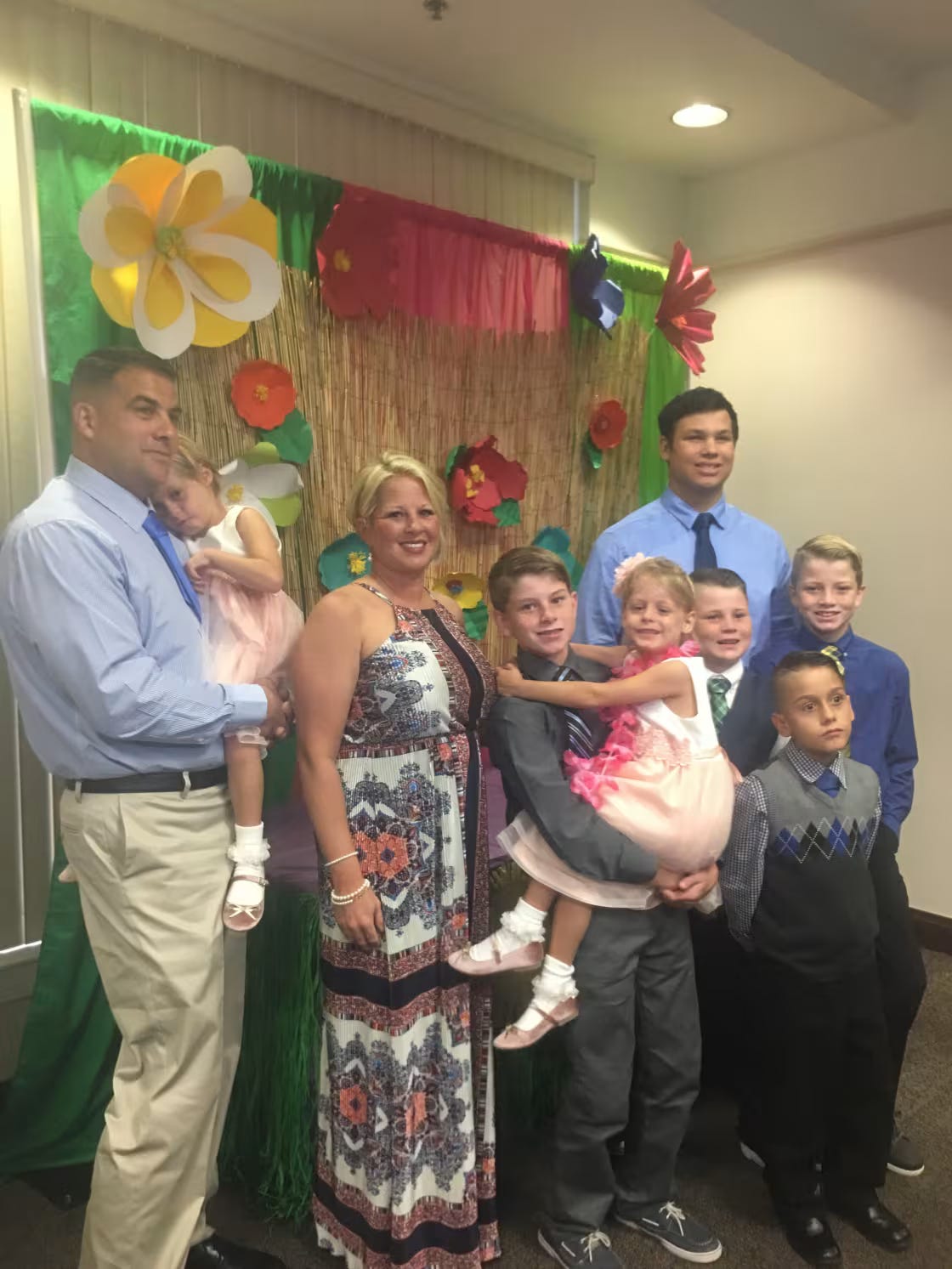
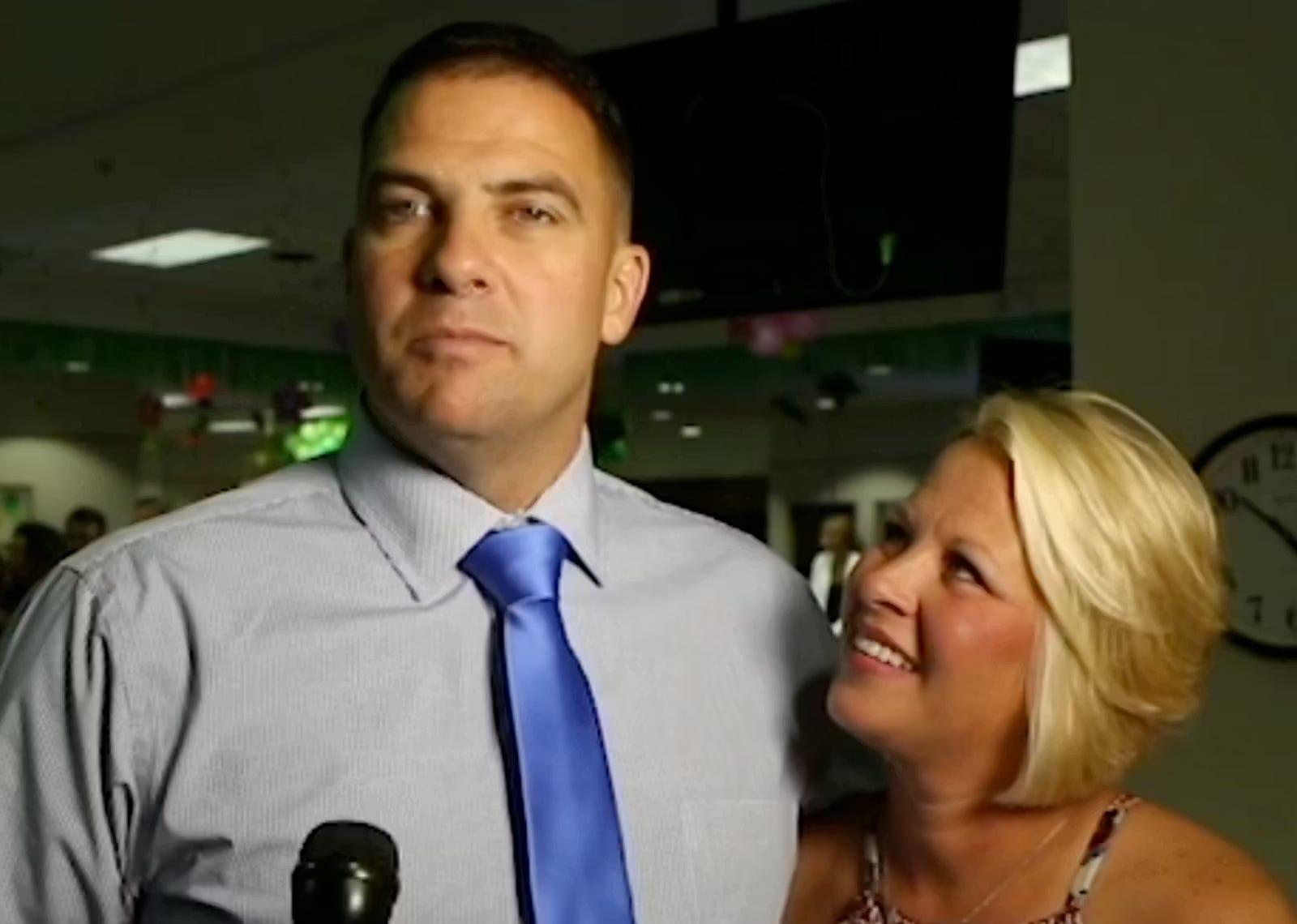
By late 2017, Gruler and his wife Jaimi were reported to have adopted three siblings through the foster care system, bringing their blended family to nine children. The Today Show and Fox News profiled them. The Orlando Sentinel—known locally as The Orlando Slantinel for its biased coverage of the City of Orlando—celebrated the milestone. These seem like, genuinely, admirable personal choices.
But, again and in his own words, as Gruler watched Omar Mateen kill people inside PULSE, he made the conscious choice not to enter the nightclub and stop the killing. He thought of his wife and children.
That moment — a public servant and sworn police officer hired to protect others choosing self-preservation — was transformed in the adoption narrative into a story about putting family first. He even had the audacity to state to the national media, “The experience [of the PULSE shooting] allowed me to recognize the priorities of life.” His life. Not the lives of the 49 who were murdered on his watch.
The same psychological accounting that explains why he didn't go inside the club became the emotional engine of a heartwarming human interest story. Dereliction, rebranded as personal growth. Zero accountability.
There is one more contradiction in the Gruler narrative that has gone entirely unexamined. While local and national media outlets celebrated the November 2017 adoptions of Adam and Jaimi Gruler as a story of love and life triumphing over tragedy, no one thought to consider that the adoption proceeding requires a court determination of parental fitness.
According to Gruler’s own public statements, his PTSD “really didn’t come to light,” he said, until after his first suicide attempt. He disclosed he was diagnosed with PTSD and alcoholism, dealing with flashbacks of the Pulse massacre — a condition so debilitating that, by March 2022, doctors certified him permanently disabled and incapable of serving as a police officer.
A man who was, by his own account and his doctors’ assessments, severely mentally ill — ill enough to attempt suicide, ill enough to never work again — appeared before a Florida family court judge during this same period and was found fit to parent six additional children.
The hero narrative required a complete man with a respect for human life. The disability and workers’ compensation systems revealed a broken and suicidal one. The question of which version of Gruler was true, and when, has never been asked.
The Pulse Valor Award came too. Gruler received the award for displaying “courage and bravery despite clear and present danger of death and injury.” This does not reflect the documented record, which includes Gruler’s own sworn testimony.
Then came the highest stage of fiction-making, after years of lies, local award ceremonies, and national media attention: Gruler was invited to the State of the Union by his congressional representative, Democrat Val Demings — a former law enforcement official who knew Gruler personally from her time as Orlando’s police chief.
Demings told the Orlando Sentinel: “As Jaimi and Adam’s representative, I am overjoyed by the love and kindness they’ve shown as they grow their family in the wake of tragedy.” Demings husband, Jerry, was also Orange County Sheriff at the time of the PULSE shooting—a position John Mina was elected to after Jerry Demings was elected the Mayor of Orange County. They both relied heavily on their connection to the PULSE hero cop narrative to boost their political campaigns, identities, and name recognition.
That’s the formula we’ve seen over an over again in Orlando in response to PULSE failures: pivot, frame everything through love, and keep the question of what actually happened inside PULSE safely off the table. A sitting member of Congress, a former police chief who knew this officer personally, escorted him into the most visible political stage in the country as a guest of honor, nine months after survivors had begun raising serious public questions about his conduct.
This tracks with the actions of the corrupt Orlando political class.
The Lawsuit That Never Got Its Facts
In June 2018, thirty-nine survivors and victims’ family members filed a federal civil rights lawsuit. The lawsuit accused Gruler of not properly responding to the attack, and also accused officers of unlawfully holding survivors in detention for hours afterward — treating them like “criminals” — and seizing their cell phones.
The suit was tossed out in November 2018 by U.S. District Judge Paul G. Byron, who wrote that the law “imposes no obligation on the states to protect individuals against private violence” and that Gruler did not act with “deliberate indifference.” police1 Judge Byron ruled that the off-duty officer’s actions didn’t rise to the level of egregious behavior and that he has qualified immunity.
The 11th Circuit Court of Appeals agreed with Byron’s decision to dismiss, saying the appeal “did not plausibly plead that the City was deliberately indifferent to victims’ constitutional rights” and that police action did not “shock the conscience.”
Here is the problem: the court ruled based on facts that were not yet fully established.
Key details about the shooting’s timeline, about what Gruler saw and when, about the nightclub’s code violations and unpermitted renovations, and about the City’s broader conduct is still being contested, withheld, or actively concealed. Information from concurrent investigations that we now have access to were not available at the time of the ruling.
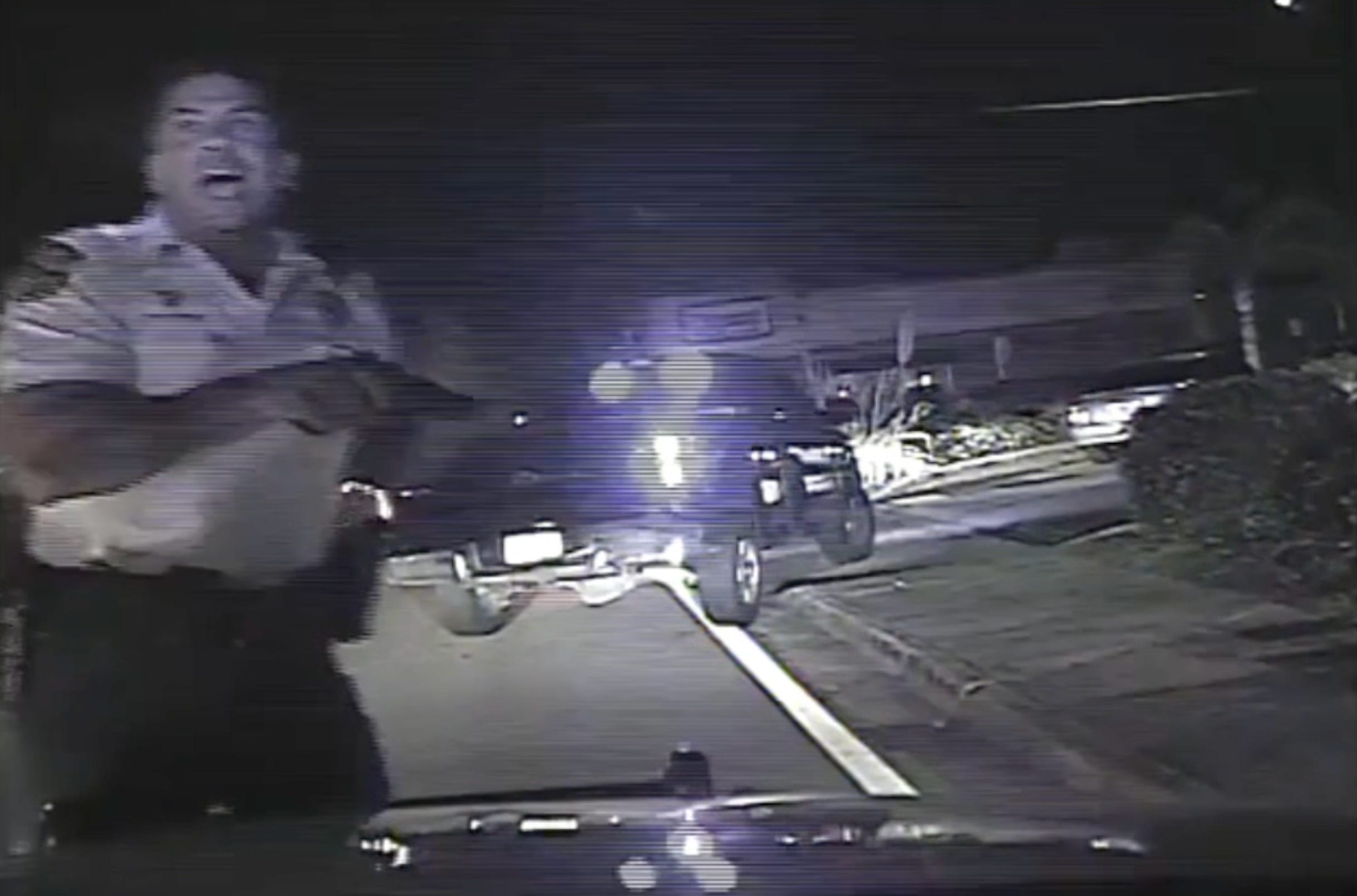
For instance, the City of Orlando never released the un-redacted dash camera footage that showed Gruler’s footsteps in those critical first 10 minutes of the shooting, when he remained outside of the nightclub and along Orange Avenue. The City did, however, use a still of that recording to distribute to the public that showed Gruler aiming his gun towards the nightclub from Orange Avenue, which helped substantiate the false claim made by Chief John Mina that Gruler and the shooter engaged in multiple gun battles with the shooter. The shooter did not fire at any cop until the final encounter over three hours later. Of the 211 rounds the shooter fired, only a few of the bullets remaining in his handgun around 5:13 a.m. were aimed at responding officers.
Again, no police entered the nightclub until after the shooter’s rifle jammed causing him to run into the bathroom with trapped victims. These actions were inconsistent with established Active Shooter Protocol and police training standards. This fact was also not disclosed until after the State Attorney’s shoot review was completed in 2019.
I was able to get this footage, below, through a public records request and applying consistent pressure against the City to force them to release this footage without redactions.
Courts decide cases based on the record before them. When that record is artificially truncated — by delayed disclosures, withheld documents, and ongoing investigation — qualified immunity functions not as a legal standard but as a shield that insulates misconduct from review precisely because misconduct was never fully examined.
The pro-police Police1 coverage of the appeals court ruling called the dismissal a vindication. It wasn’t. It was a procedural outcome in a case that never had the full factual record it deserved.
The Architecture of Impunity
The Parkland comparison is worth dwelling on. When Broward County deputy Scot Peterson waited outside Marjory Stoneman Douglas High School as children were killed, he was fired, arrested, and tried for criminal neglect. The comparison is imperfect — the cases differ in important ways — but the contrast in public and institutional response is stark. The Orlando Sentinel asked the question directly in 2019: why was one cop called a hero and the other arrested?
The answer has little to do with the law and everything to do with narrative. Peterson had no hero story. He had no adoption. He had no Val Demings. He had no institutional machinery working to tell a different story about him. Gruler did.
And then there is Uvalde. On May 24, 2022, a gunman entered Robb Elementary School in Uvalde, Texas and killed 19 children and two teachers. Nearly 400 law enforcement officers responded and investigations found that a 77-minute delay in mounting a counterassault contributed to the carnage. A grand jury eventually indicted two former school police officers — former Chief Pete Arredondo and officer Adrian Gonzales — on felony child endangerment charges, the first criminal charges brought against law enforcement for the botched response. Gonzales went to trial in January 2026. He was acquitted.
From the start, authorities also did what authorities do: they lied. In a news conference in the days after the shooting, Texas Department of Public Safety officials publicly blamed teacher Amy Marin-Franco for propping open a door that allowed the shooter inside. Three years later, that was later proven to be false. CNN obtained surveillance footage showing Marin-Franco had in fact kicked the rock from the door and pulled it shut. Law enforcement saw that same footage before the press conference where they blamed her.
The pattern is consistent: officers wait outside while people die inside, authorities lie to shift blame, investigations take years, charges — when they come at all — fail to stick. PULSE was not an anomaly. It was a blueprint.
What we are left with is a system that works exactly as designed: a shoddy and slow-walked investigation that withheld key facts for years; a civil lawsuit dismissed before those facts were known; a qualified immunity doctrine that protects officers from just consequences; and a carefully constructed public narrative that made scrutiny feel unseemly, even cruel.
Forty-nine people were murdered. Unarmed. Inside. While the trained, armed, and armored police officer hired to protect them stayed outside and watched—again, according to his own sworn testimony.
PULSE victims-survivors deserve more than a heartwarming story. They deserve a reckoning — and one conducted with the full factual record, not the carefully managed version the City of Orlando spent years constructing.